About the Gottesman Engraving Center – Kibbutz Kabri
The Gottesman Engraving Center at Kibbutz Kabri is a unique artistic institution operating since 1993, specializing in the production of contemporary engraving works. The workshop is located in the heart of the Galilee landscape, between mountains and sea, and combines artistic excellence with a community-cultural vision.
Our story
The engraving workshop at Kibbutz Kabri was established in 1993. The workshop works to create artistic engraving works. Its uniqueness lies in its location in a rural landscape in the Western Galilee, in a place overlooking the mountain and the sea.
Kibbutz Kabri has a connection between business and art, based on the view that art is a productive factor and a contributor to the community, its individuals, and the business basket. Two renowned artists lived and created in the crypts, Uri Reizman, a painter, and Yechiel Shemi, a sculptor and Israel Prize laureate. In addition, various artists live and create in the crypts; a beautiful sculpture garden is open to the public next to the workshop where the sculptor Yechiel Shemi worked and created; the high school has a plastic arts major; the kibbutz has a gallery for contemporary Israeli art; and a museum is planned. The engraving workshop is intended to be a place of creation for painters and printmakers from Israel and abroad and a center of attraction for art-loving tourists, and indeed many artists visit it every year.
In 1996, Rachel and Dov Gottesman, art collectors and activists in the fields of plastic art and music in Israel and abroad, arrived here for the first time. This was the beginning of a connection and friendship between the Gottesman couple and the workshop staff and the community in Kibbi. In 2000, following a meeting in New York with Jim Dayan, an American artist, painter, sculptor, photographer and master in the field of printmaking, they initiated a meeting in the format of a master class, which took place in the engraving workshop in Kibbutz Kabri, where they stayed and created for 10 days, together with 12 Israeli artists, alongside Jim Dayan.
This successful project led to the next project – a series of artist portfolios, published by Gottesman. The first portfolio in the project was “Nicanor’s Gates” by Ofer Laloush, who was the one who introduced Rachel and Dov Gottesman to the workshop. Since then, over 20 portfolios by various Israeli artists have been produced.
In 2006, the Gottesman family initiated the expansion of the engraving workshop, and in collaboration with Kibbutz Kabri, they established a new building, which, in addition to the work space, also contains two galleries displaying the “fruits” of the workshop. The idea of expanding the building was in line with earlier museum plans, and architect Assaf Gottesman, who had designed the museum building a decade earlier, designed the renovated workshop building. The workshop’s name was changed to the “Gotesman Center for Engraving.”
About the Gutman Engraving Center – Kibbutz Kabri
The workshop is characterized by a high professional level of work, which puts it on a par with the best workshops in the world.
With the help of a professional and skilled team on site, the prints are produced in rich colors and by combining many different techniques from the world of printing.
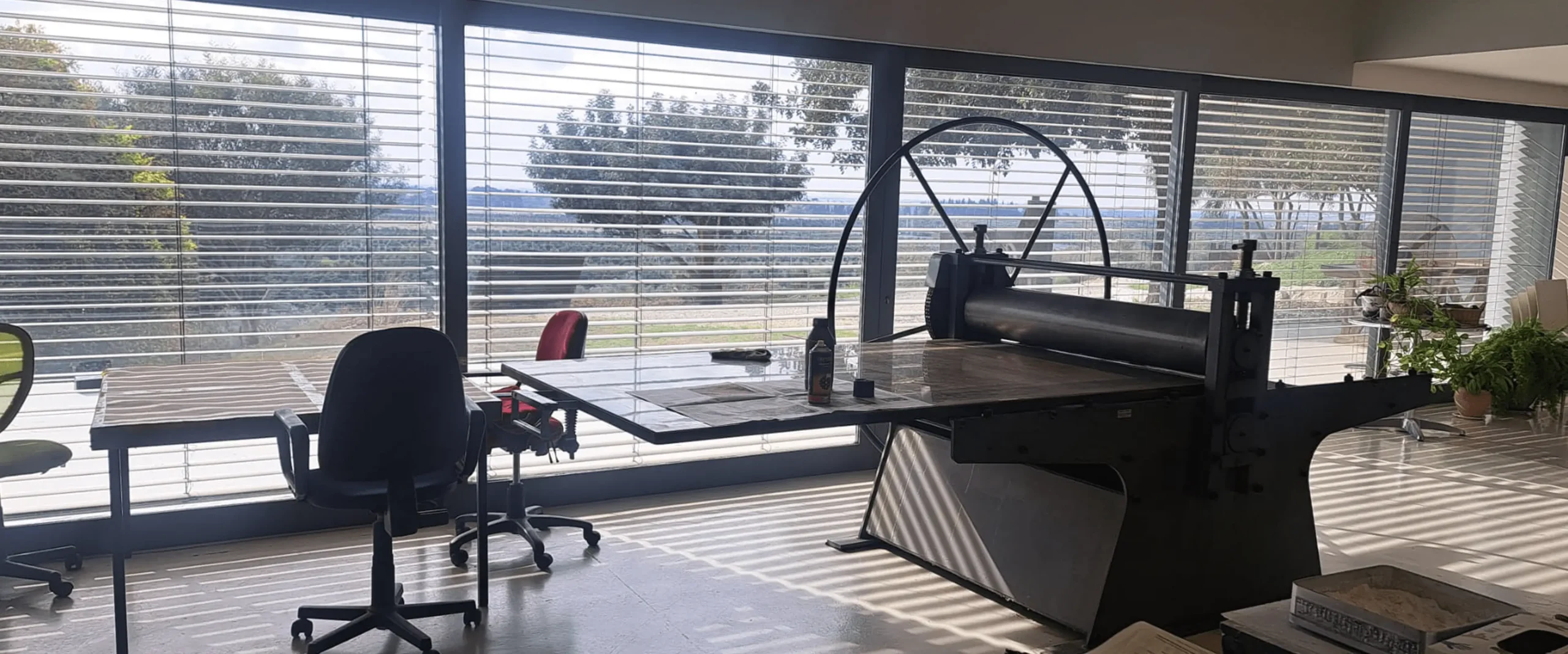
The workshop has the largest press in the country, which can print in a format of up to 130X230 cm.
The workshop has all the equipment required for printing up to this size – a variety of paper types, a huge aquatint box, large etching baths, a heat table, and more. The workshop also has all the equipment required for working with photoetching, and it is also possible to work in this technique.
All of this opens up possibilities for creating mixed-technique engravings, which go beyond the conventional and traditional in engraving works.
The workshop houses the largest printing press in Israel – with a print length of up to 130×230 cm. This is a rare tool that allows for the production of engravings in an especially large format, while maintaining high print quality, sensitivity to detail and great precision.
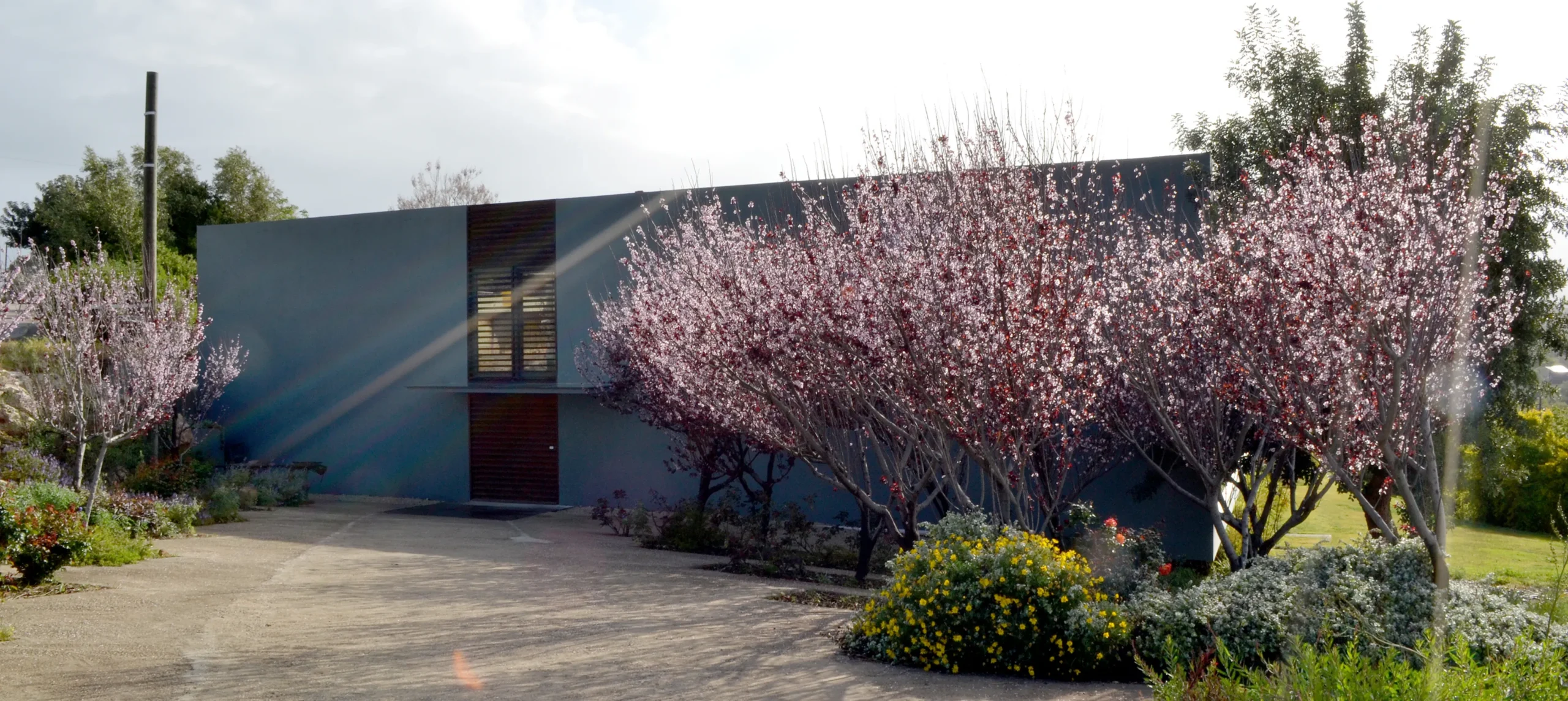
Artists coming to the workshop have access to a guest apartment, where they can stay during the period of their work at the venue.
The workshop employs skilled printmakers who assist the artist in the process of creating the engraving and printing it, while emphasizing the level of precision and care required.
The artists prepare the plates from which the engraving will be printed with their own hands, while choosing the means and techniques that will best express the uniqueness of their artistic language and works.
The artists working and creating in the workshop include top-notch painters and sculptors in Israel, as well as renowned and reputable artists from abroad.
The workshop contains works by all the artists who worked there.
The workshop is characterized by unique projects, such as:
· Master Class, in which a group of artists gathers to work closely with a renowned artist, so that learning and mutual enrichment occur during the work.
· Collaborations with museums, including the Israel Museum and the Tel Aviv Museum, on various projects.
· ‘Artist books’ are published in elegant covers, containing a series of prints by one or more artists, combined with the text.
In addition to the artists’ work, the workshop also holds engraving study courses at various levels, several times a year.
You can visit the workshop, watch the work process, and be exposed to a diverse selection of works.
An exhibition is held there and engravings from the workshop’s work can be purchased.
Uri Reisman
Uri Reizman (1924–1991) was an Israeli painter, one of the founders of Kibbutz Kabari. His work ranged from abstraction to direct painting…
Continue reading
and relied on the description of landscapes, figures and portraits from a personal and sensitive perspective. Reisman lived and created on the kibbutz until his death. His work is considered one of the most prominent contributions to Israeli painting of the second half of the 20th century.
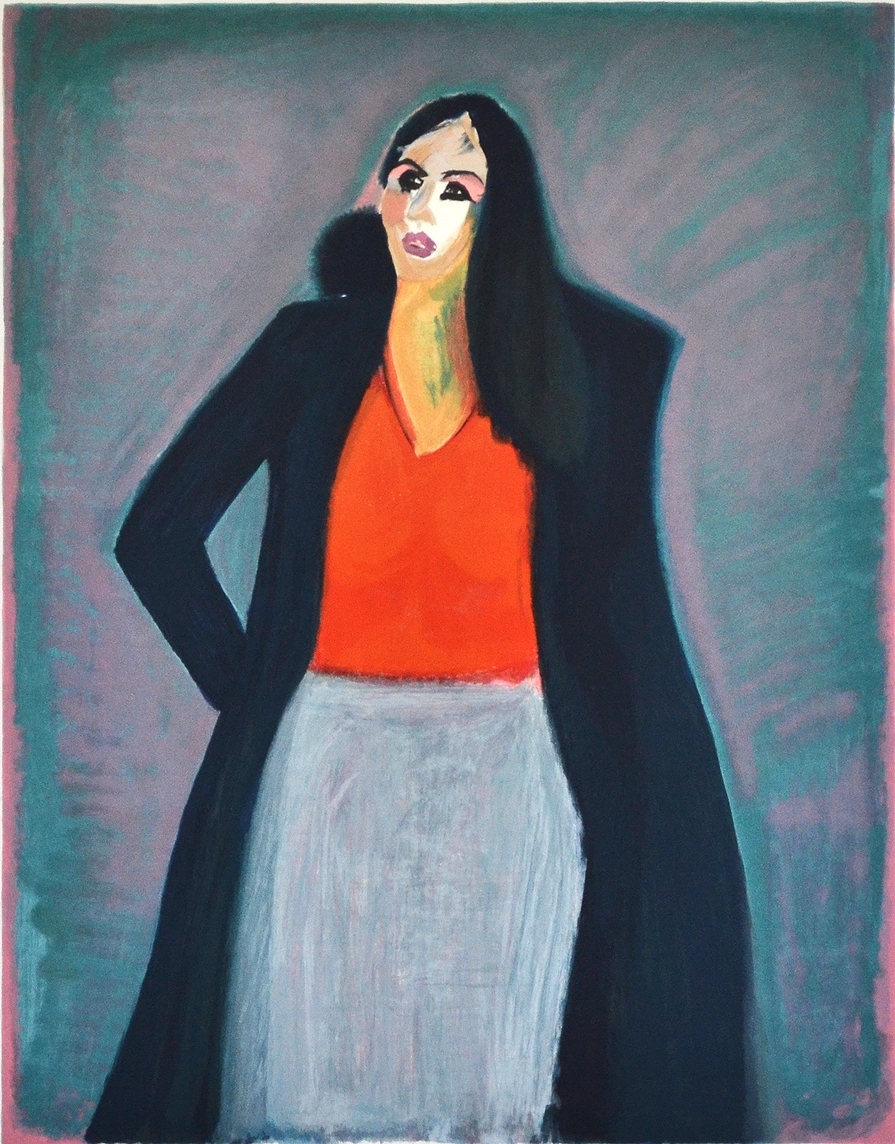
Uri Reizman (1924–1991) was an Israeli painter, a member of Kibbutz Kabri, whose work was based on the depiction of landscapes, figures, and portraits from a personal and sensitive perspective. His work ranged from abstraction to direct painting, and is considered one of the most prominent contributions to Israeli painting of the second half of the 20th century.
He was born on Kibbutz Tel Yosef, the son of parents who immigrated to Israel from Russia as part of the “Labor Battalion.” As a child, the family moved between Tel Aviv, Jerusalem, and Paris. His mother, Bat Sheva, was an amateur actress in the battalion’s studio theater and had a great influence on him:
“[Mother] would work with the help of the mirror, I would watch and listen. If the rehearsal was successful […] I would burst into tears… [She] stopped working with the mirror and used me as a kind of partner.”
Already in his youth he studied painting with Yitzhak Frankel, and later was one of the founders of Kibbutz Beit Arava. He then moved with the evacuated group to the Western Galilee and was one of the founders of Kibbutz Kabri, where he lived and created until his death. In the 1950s he spent time in Paris and studied monumental art at the National School of Fine Arts. Upon his return to Israel he experienced difficulty adapting, both artistically and mentally. He described his encounter with the local light as a crisis:
“I looked and was terrified: it was something I didn’t know how to paint… it was a light I didn’t know how to define. White, and yet – not white.” For years he painted in a studio he set up on the edge of the kibbutz, at first with a few days’ allocation and a stubborn struggle with the kibbutz committees. Only in the 1970s was he allowed to devote all his time to painting. His work focused on landscape paintings, Jerusalem alleys, portraits and portraits of his family and friends. In the 1970s he participated in the “Aklim” group, which called for the expression of the place and local culture in art.
Reisman has had many exhibitions in Israel and abroad, including solo exhibitions at the Haifa Museum, the Israel Museum, the Mishkan for Art in Ein Harod, and important galleries. He has won significant awards, including the Discount Bank Prize for an Israeli Artist (1988) and the Histadrut Prize named after Nachum Gutman (1991). His paintings have been purchased for the collections of the Israel Museum, the Tel Aviv Museum of Art, and other institutions.
The loss of his wife, Mazal, recurring injuries, and mental health problems led to a cessation of his artistic activity in his final years. He died on Kibbutz Kabri on his 67th birthday, during the First Gulf War.